
Clear answers to the questions people ask when a detector flags their writing: how AI detectors score text, how often they get it wrong, and how to rewrite an AI-assisted draft so it reads like you without changing what it says. Every guide opens with a short answer and links to the research behind it.
of essays by non-native English writers were flagged as AI, on average, across seven detectors in a 2023 Stanford study.
Are AI detectors accurate? →accuracy for every one of 14 detection tools in an independent academic test of human, AI and edited text.
How AI detectors work →or more of 2024 biomedical abstracts were likely edited with AI, judged by a sudden rise in words like delves and showcasing.
Signs of AI writing →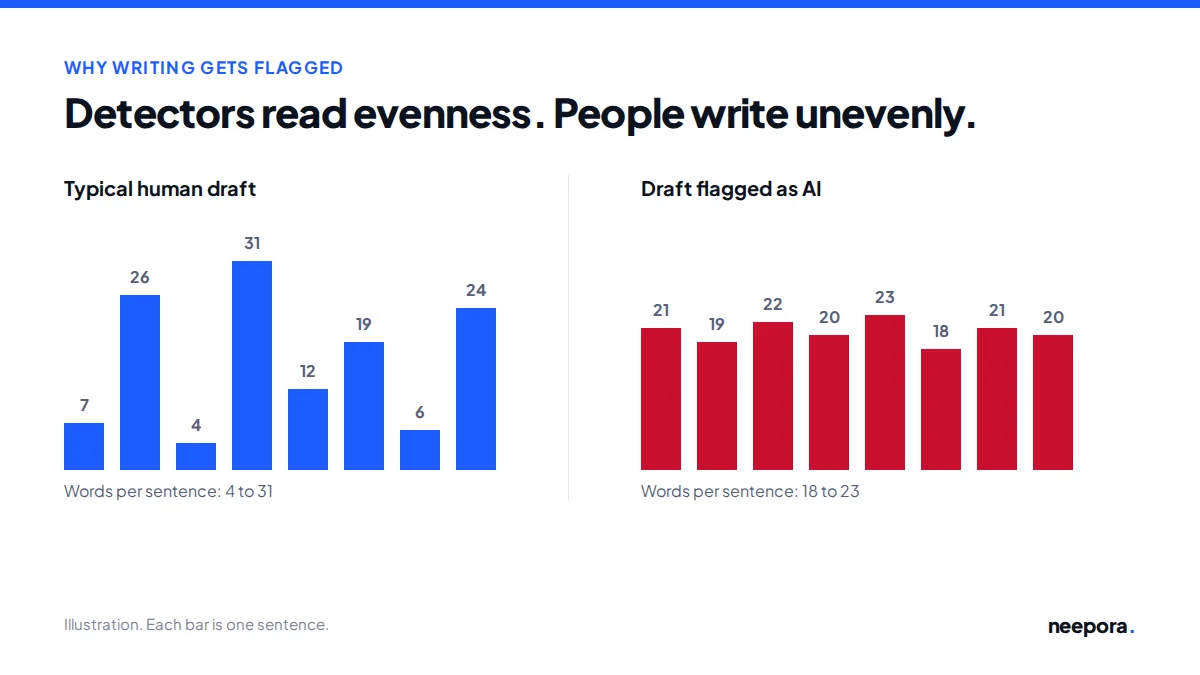
The nine patterns that make human writing look machine-made, how to spot each one in your own text and what to do once it has happened.
A detector score is not a verdict. Start here if a teacher, client or tool has questioned your work.
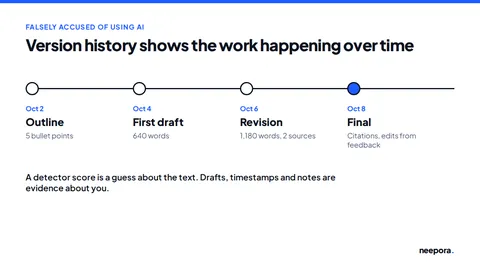
The evidence that actually helps, a message you can adapt for your teacher or manager, and how an appeal usually works.
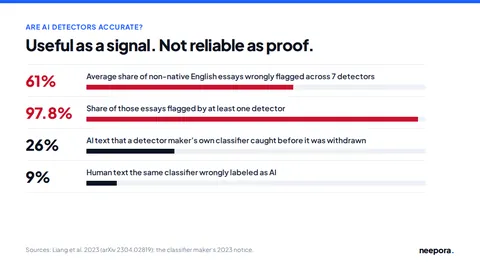
What independent studies found, who gets flagged unfairly and how much weight a single score deserves.
What detectors measure, what they miss and the patterns readers notice.
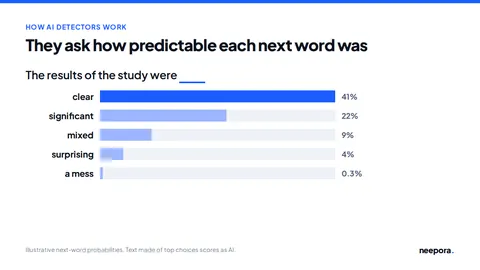
Perplexity, burstiness and trained classifiers explained without math, and why every result is a probability.
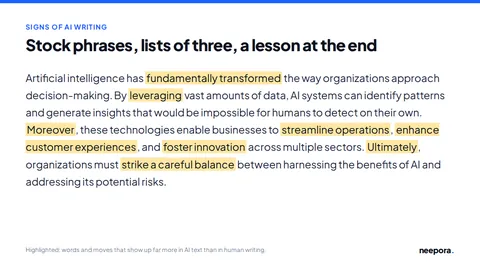
Seven things a careful reader notices, the words that give AI text away and what no reader can tell by eye.
Rewrite AI-assisted drafts so they read like you, without changing what they say.
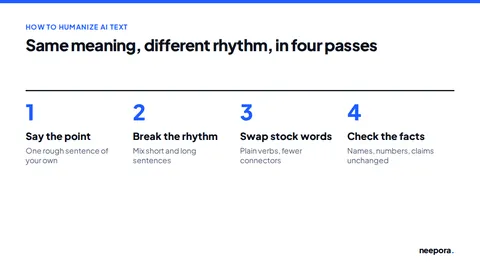
By hand, with a prompt or with a tool: what each method takes and how to check the result.
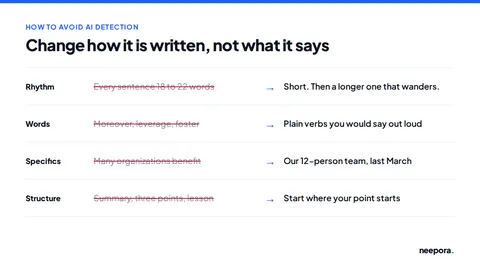
Eight editing steps that change how a draft reads, and the shortcuts that make it worse.
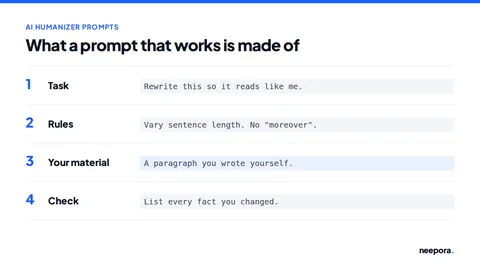
Ten copy-ready prompts, what each one fixes and where prompting stops working.
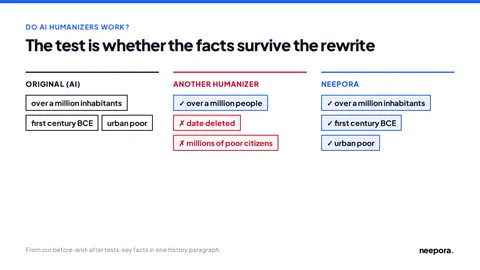
Before-and-after tests checked line by line for meaning, and how to run the same test on your own text.